
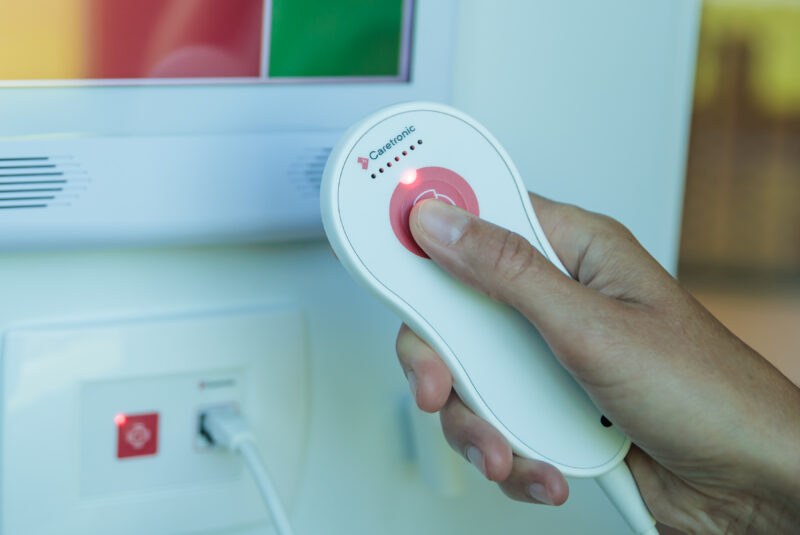
Healthcare communication systems have a simple core purpose: helping patients and residents reach the people responsible for their care. But communication in a modern facility involves more than sending an alarm from one room to a central display. Staff also need context, clear records, reliable escalation and access to information where care takes place.
When an existing healthcare communication system reaches the end of its useful life, a facility has an opportunity to improve this wider process. This may involve an older nurse call system installation, a separate alarm network or several disconnected tools. NurseCare combines nurse call functions with digital documentation, reporting and workflow support. It can use suitable existing IP infrastructure, helping facilities modernise without replacing every part of the installation.
A Replacement Should Improve the Whole Communication Process
A healthcare communication system may remain in use for many years. Eventually, parts become harder to source, maintenance becomes more difficult or the technology no longer meets the facility's needs. In many facilities, the ageing technology is a legacy nurse call system that works separately from documentation, reporting and other communication tools.
At that point, replacement is necessary. The easiest option may appear to be a newer version of the same system. The nurse call buttons are replaced, the alarms work again and the immediate technical problem is solved.
The immediate technical problem is solved, but the working process may remain unchanged.
A basic replacement can preserve the same limitations. Calls arrive without useful context. Care documentation remains in a separate system. Staff enter the same information more than once. Managers have little insight into response times, call volumes or recurring patterns.
Replacing an old nurse call system should therefore start with the needs of patients, residents, staff and managers. The project should consider what information each group needs and how that information moves through the facility.
Planning a replacement? Tell us which system you currently use and how many beds your facility has. We can help you review the technical and operational options. ➡️ CONTACT US
What a Modern Healthcare Communication System Should Provide
The term »healthcare communication system« covers different technologies, from nurse calls and staff alerts to voice communication, documentation and reporting. Not every facility needs the same functions, but the underlying requirements are similar.
A useful communication solution should:
- deliver calls and alarms reliably;
- show where a call came from;
- support clear priorities and escalation rules;
- help staff understand what action may be needed;
- record calls and responses;
- connect with relevant care and building systems;
- make information available where staff need it; and
- provide useful data for operational review.
This is particularly important in hospitals and care homes, where one message may pass through several people before the right action is taken. A healthcare communication system should reduce this friction, not create another isolated channel.
Using a Necessary Replacement to Improve Daily Work
Replacing equipment is a technical project. Improving communication is an operational project. The two should be planned together.
Before selecting a nurse call system, facilities should map how a call works today. This includes how a patient or resident asks for help, who receives the call, what information is available and how the right person is selected. The review should also cover escalation, documentation and the information available to management afterwards.
This simple review often reveals unnecessary steps, duplicated information and delays between the original request and the response. Healthcare workflow automation can help with some of these steps. It can route information, create records and reduce repeated manual entry. It should not remove professional judgement or force every situation into the same process. Its role is to handle predictable administrative steps so that staff can focus on care.

Reusing Existing Infrastructure Where It Makes Sense
Modernisation does not always require a complete rebuild. NurseCare is designed as an IP-based communication system and can operate on suitable existing IP networks and infrastructure. This can reduce new cabling, construction work and disruption to daily care. It may also allow the project to be introduced in stages rather than replacing the whole installation at once.
However, reuse should never be assumed. A site assessment should examine the condition, capacity and compliance of the existing infrastructure. It should identify what can remain, what needs to change and how the transition can be completed safely.
The technical review should cover:
- Is the current network suitable for the new system?
- Which cables and devices can be retained?
- Can old and new components operate together during the transition?
- How will calls be handled while installation work is taking place?
- What future capacity should be planned now?
Could your facility modernise without replacing all of its cabling? A technical assessment can provide a clear answer before budgets and timelines are finalised. ➡️ CONTACT US
Moving Documentation Closer to Care
In many facilities, communication and documentation are separate activities. A staff member responds to a call, provides care and later returns to a workstation to record what happened. This gap creates extra walking and makes documentation dependent on memory. It can also lead to duplicate entry when the same information is recorded in more than one system.
NurseCare supports documentation at the point of care. Staff can record relevant actions in the room, while the interaction is still recent. Calls and care activities become part of a more connected workflow. This is a practical form of healthcare workflow automation. The aim is not to automate care itself. It is to reduce repetitive administrative work around care.
For staff, this can mean fewer returns to a central computer. For managers, it can mean more complete and timely records. For patients and residents, it can leave more time for direct attention.
Using Communication Data to Support Better Decisions
A legacy nurse call system may generate an alarm without creating a detailed record. This makes it difficult to answer basic operational questions:
- How quickly are calls answered?
- Which rooms or units have the highest call volumes?
- When are the busiest periods?
- How often are calls repeated?
- Where do escalation rules need to be reviewed?
- Are staffing patterns aligned with actual demand?
NurseCare logs calls and supports reporting on response times, call volumes and related patterns. The data can help managers understand how the system is used and where workflows may need attention. Data should support decisions, not replace them. A longer response time may reflect staffing, room layout, patient needs or the type of call. Reports need to be interpreted in context and discussed with the people doing the work.
Would better call data help you review staffing and response times? Request a demonstration based on scenarios from your facility.
Looking Beyond the Initial Nurse Call System Price
The initial nurse call system price is only one part of the cost. Facilities should also consider installation, maintenance, administration, staff time, reporting and future integrations. A simple replacement may cost less at the start but preserve inefficient processes for many years. If staff continue to document calls manually, enter information twice or walk back to central workstations, those costs remain part of daily operations.
The nurse call system price review should therefore include:
- hardware and installation;
- required changes to infrastructure;
- licences and ongoing support;
- maintenance and spare parts;
- staff training;
- time spent on manual administration;
- integration with other systems; and
- the cost of future changes or expansion.
An open, scalable platform may require a different initial investment from a basic alarm solution. The relevant comparison is the total nurse call system price and operational effect over the expected life of the installation.
How NurseCare Connects Calls, Records, and Workflows
A conventional replacement may deliver new nurse call buttons and dependable alarms while leaving the wider workflow unchanged. NurseCare is designed to connect call handling with care documentation and operational information.
Depending on the configuration, the platform can provide:
- a digital record of every call;
- defined call priorities and escalation;
- documentation at the bedside;
- integration with suitable existing infrastructure;
- reports on response times and call volumes;
- support for connected care workflows; and
- an open IP platform that can grow with the facility.
The purpose is not to add more technology to the ward. It is to reduce gaps between a request, the response and the record of what happened.
Caretronic's solutions can reduce administrative time by more than 20 percent. Actual results depend on the facility, nurse call system configuration, existing processes, training and adoption. For this reason, expected benefits should be defined before implementation and measured afterwards.
A Practical Checklist for Choosing a New Nurse Call System
Before replacing a legacy nurse call system, ask:
- Which problems are caused by old equipment, and which are caused by the current workflow?
- What information should staff receive with each call?
- How are calls, responses and care activities documented today?
- Which manual tasks could be simplified safely?
- Which existing systems should exchange information with the new platform?
- Can suitable infrastructure be retained?
- How will staff be trained and supported?
- What reports will management actually use?
- Can the platform support future changes in beds, units or services?
- Does the supplier provide a clear migration and support plan?
These questions help compare more than product specifications. They show how well each option fits the actual work of the facility.
Implementation and Long-Term Support
Healthcare communication systems form part of a facility's safety infrastructure. Reliable products are essential, but implementation quality also matters. Configuration, testing, staff training, maintenance and technical support all influence how the equipment performs in practice.
At Caretronic we have more than 30 years of experience and over 150,000 active users in more than 500 facilities worldwide. NurseCare is certified to DIN VDE 0834. The exact certification and regulatory requirements should always be checked for the country and type of facility where the system will be installed.
When comparing suppliers, facilities should request a clear description of responsibilities before, during and after installation. They should also ask how the supplier will manage the transition from the old system and verify that calls remain available throughout the project.

500+ facilities worldwide

150.000+ active users

30+ years of experience
A Simpler and More Connected Way of Working
Replacing a healthcare communication system is not only about new hardware. It is an opportunity to examine how a request becomes an action and how that action becomes a reliable record. Well-designed solutions connect these steps without making care more complicated. They give staff the information needed to respond, support documentation close to the patient or resident and provide managers with a clearer view of daily operations.
Technology will not solve every staffing or workflow problem. But an IP-based communication system should remove avoidable manual steps rather than preserve them for another decade. So, are you replacing your healthcare communication system with a newer version of the same process? Or can the project create a simpler and more connected way of working? Tell us what you are replacing, how many beds you have and what you want to improve. We can assess the site, review the existing infrastructure and prepare a personalised NurseCare demonstration.